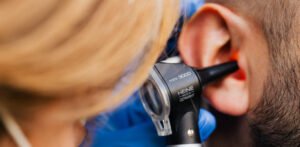


Failing to receive a reasonable level of care during or after cosmetic surgery can result in avoidable harm and suffering. If this has happened to…

Ear correction surgery claims
If your ear correction surgery has gone wrong due to medical negligence, you may be entitled to make an ear surgery compensation claim.
We are a claims management company regulated by the Financial Conduct Authority.
Ear Surgery Claims
Ear surgery can enhance the shape and position of the ears, helping many people feel more confident about their appearance. But when ear correction surgery goes wrong due to medical negligence, you may be entitled to make an ear surgery compensation claim.
As with any surgical procedure, ear surgery carries some risks. However, if a surgeon makes a mistake or you receive poor aftercare, it can lead to avoidable complications such as nerve damage, infection, or permanent deformity.
If your ear surgery was botched due to poor medical care, our medical negligence team is here to help. We can help you claim compensation to cover the cost of revision surgery, ongoing treatment, and psychological support with a No Win No Fee service.
To find out if you are eligible to make an ear surgery claim, call 0800 470 0474 today or use our online claim form to request a call back.
 Key points about ear surgery claims
- Can I claim for ear surgery complications?
If you suffered harm from a negligent ear procedure, such as cosmetic otoplasty or ENT surgery, you may be entitled to claim. - Who is liable?
The NHS Trust or a private healthcare provider may be at fault if they failed to follow proper procedures or gave poor aftercare. - Is there a deadline?
You generally have 3 years from the date of surgery or from when you realised negligence occurred. - How much compensation could I receive?
This depends on the nature of the injury, scarring, hearing loss, psychological effects, and related financial losses. - Do I need to pay anything upfront?
No, your ear surgery claim will be made on a no win no fee basis, so you only pay a fee if your claim is successful.
If you would like to speak to a legal adviser about making a claim, call free on 0800 470 0474 or click here to request a call back.
By submitting this form you agree to be contacted by our partners. Find out how we handle your data in our privacy policy.
 Table of Contents
Am I eligible to make an ear surgery claim?
To be eligible to make a compensation claim following botched cosmetic surgery, your personal injury solicitor must be able to prove the following:
A duty of care
This duty exists whenever you seek care from a medical professional. This refers to the legal obligation to provide a standard of care that is reasonable and competent, thereby avoiding foreseeable harm.
A breach of duty
You must be able to prove that a medical professional breached their duty by providing substandard care. This means their actions (or inactions) fell below what a reasonably competent peer would have done under similar circumstances.
Examples of a breach of duty include poor hygiene, lack of informed consent or mistakes made during the ear correction surgery.
Causation and damages
The breach of duty must directly cause you harm, injury, or avoidable pain and suffering. This could include physical disfigurement, mental distress, additional medical expenses, or loss of earnings.
If you didn’t suffer unnecessary harm or loss, you would not be able to proceed with a claim even if there was a breach of duty.
Our friendly legal advisers will offer you a free initial consultation to quickly assess whether you meet the criteria for a valid claim. You can also use our claim assessment form below:
Did you suffer an injury?
Did you suffer an injury?
Unfortunately, we can only help if you have suffered an injury in an accident that wasn't your fault. If you have made a mistake, please click below to start again.
When did your accident happen?
We need some more details.
Based on your answers, we're not sure if we can help. However, if you enter your details below, we'll give you a call back to discuss your accident. It's completely free, with no obligation.
By submitting this form you agree to be contacted by our partners.
Find out how we handle your data in our privacy policy.
Where did the accident happen?
We need some more details.
Based on your answers, we're not sure if we can help. However, if you enter your details below, we'll give you a call back to discuss your accident. It's completely free, with no obligation.
By submitting this form you agree to be contacted by our partners.
Find out how we handle your data in our privacy policy.
Who was at fault for your accident?
We need some more details.
Based on your answers, we're not sure if we can help. However, if you enter your details below, we'll give you a call back to discuss your accident. It's completely free, with no obligation.
By submitting this form you agree to be contacted by our partners.
Find out how we handle your data in our privacy policy.
Are you over 18 years of age?
We need some more details.
Based on your answers, we're not sure if we can help. However, if you enter your details below, we'll give you a call back to discuss your accident. It's completely free, with no obligation.
By submitting this form you agree to be contacted by our partners.
Find out how we handle your data in our privacy policy.
Good news! It looks like you may have a valid claim.
Based on your answers, it looks like you may have a valid claim. Enter your details below and we’ll call you back to discuss your options. It’s completely free, with no obligation.
By submitting this form you agree to be contacted by our partners.
Find out how we handle your data in our privacy policy.
What is otoplasty?
Otoplasty, or ear correction surgery, is a cosmetic procedure that aims to change the size or shape of the ears or set them back if they protrude prominently.
The intervention can be performed on older children or adults by either a plastic surgeon or an ENT (ear, nose and throat) surgeon. Depending on the type of procedure, it can be carried out under local anaesthesia or general anaesthesia.
The process usually involves:
- Making a small incision behind the ear
- Reshaping the cartilage or removing pieces of it if necessary
- Putting stitches behind the ear to reposition it
Otoplasty is generally a safe procedure that takes one to two hours. Within ten days, the stitches and bandages are removed, and complete recovery is expected within eight weeks.
Like any type of cosmetic surgery, it carries inherent risks, such as excessive bleeding, infection and allergic reactions to the anaesthetic.
Typically, these side effects are mild and resolve without complications. However, the surgery can sometimes go wrong and cause substantial or long-term harm, which could form the basis for a successful ear correction surgery claim.
What types of injuries can be caused by a botched ear surgery?
Negligent otoplasty surgery can lead to a range of physical and psychological injuries, such as:
- Disfigurement – including uneven, misshapen or unnaturally shaped ears.
- Post-surgical infection – potentially leading to cartilage damage and abscess formation.
- Excessive or keloid scarring – highly visible, raised or painful scars.
- Nerve damage – causing numbness, tingling or altered sensation.
- Hearing loss – this can occur in rare but severe cases.
- Pain and discomfort – chronic pain in the ear area, which may not resolve with time.
- Skin necrosis – death of the skin tissue due to poor blood supply, potentially needing skin grafts.
- Haematoma or seroma – accumulation of blood or fluid under the skin, needing drainage.
- Psychological harm – such as anxiety, depression and loss of confidence.
Furthermore, complications resulting from negligent ear surgery can also lead to financial strain due to lost earnings during recovery, the cost of corrective surgery if done privately and other expenses.
Your cosmetic surgery solicitor will ensure that all your losses are included in your ENT surgery claim and that you receive the maximum compensation owed to you.
What types of mistakes could lead to ear surgery compensation claims?
An ear surgery negligence claim can result from various mistakes during or after the procedure due to medical negligence. Common examples include:
- Failing to explain risks and obtain informed consent.
- Failing to assess your medical history and suitability for the procedure properly.
- Poor surgical technique, such as incorrect suturing or excessive removal of cartilage.
- Poor hygiene or tools that are not properly sterilised causing infections.
- Failing to consider other forms of treatment before surgery.
- Improper placement of grafts or implants.
- Anaesthetic errors leading to allergic reactions, pain or awareness during the surgery.
- Failing to recognise and adequately address complications.
- Lack of instructions regarding your aftercare.
Any other form of clinical negligence could mean that you are entitled to seek compensation for your injuries.
Speak to a legal advisor today!
Friendly legal advisers are available to discuss your claim today.
How can I make a claim for ear correction surgery?
The personal injury claims process begins with a free consultation with an experienced solicitor. They will assess your case and determine whether you have a valid claim.
If eligible, they will help you gather supporting evidence, including medical records and reports from independent medical experts.
Once sufficient evidence is gathered, they will send a letter of claim to your healthcare provider and attempt to negotiate a settlement with them.
If the defendant denies liability, your solicitor may take the case to court. However, this is quite rare, as most claims are settled through negotiations.
If your claim is successful, you will be awarded compensation, typically within four weeks.
Read more: How many personal injury claims go to court?
Can I still claim compensation if I signed a consent form?
Yes, you may still be able to make a claim for compensation even if you signed a consent form before your ear surgery. A signed form does not protect medical professionals from liability if they provide substandard care and you suffer an avoidable injury.
While the consent form shows that you were informed about the known and inherent risks associated with the procedure, you are entitled to claim if:
- You were not fully informed about all the risks.
- The surgery was performed poorly or by an unqualified person.
- Your aftercare was inadequate and led to complications.
A specialist solicitor will be able to review the details of any consent form you signed and let you know if you can proceed with a claim.
What evidence do I need to support a medical negligence claim?
To successfully support an ear surgery claim, your solicitor will gather a range of evidence, which may include:
- Your medical records – Detailing the consultations before the procedure, your treatment, and the follow-up care.
- Photographic evidence – Showing visible damage or disfigurement before and after surgery.
- Expert medical reports – Your solicitor will arrange for an independent specialist to review your treatment and confirm whether it fell below the expected standards.
- Witness statements – From anyone aware of your condition before and after the surgery.
- Your testimony – Your detailed account of the events and how the botched ear correction surgery has affected your life.
- Financial evidence – This could include receipts, travel costs, or records of lost earnings.
What is the time limit for starting an ear surgery negligence claim?
The Limitation Act 1980 imposes a three-year limitation period for starting a personal injury claim, including for ear correction surgery compensation. The three years start from either:
- The date on which the negligence happened.
- The date on which it was discovered (the date of knowledge).
There are a few exceptions to the standard 3 year rule:
- Claims involving children – Child injury claims can be made by a parent or guardian at any time. After turning 18, they have until 21 to claim compensation themselves.
- Mental capacity – No time limits apply if the injured person lacks the mental capacity to make legal decisions and handle a claim. A close friend or relative can claim on their behalf at any time.
Speak to a legal advisor today!
Friendly legal advisers are available to discuss your claim today.
How much compensation could I receive for negligent ear surgery?
The amount of compensation for ear surgery gone wrong is calculated based on the following types of damage:
- General damages – awarded for pain, suffering and loss of amenity (the impact on your quality of life).
- Special damages – covering financial losses, such as loss of earnings, travel expenses, the cost of further treatment, and psychological counselling.
According to the compensation guidelines published by the Judicial College, you could receive up to £24,000 for the pain and suffering caused by the negligent cosmetic procedure.
You can read more about how much compensation you could be entitled to here: How much could you claim?
Will my solicitor offer me a No Win No Fee service?
If you have grounds for a claim, your medical negligence solicitor will work on a no win no fee basis. That means you do not have to worry about paying them upfront, and you won’t lose a single penny if your case is unsuccessful.
Under this arrangement, your solicitor only gets a success fee if and when you receive compensation. This fee is:
- Agreed upon from the beginning
- Capped at 25% of your damages
- Deducted from your settlement
You won’t have to pay your personal injury lawyer at all if you lose your cosmetic surgery claim.
For a free case assessment, call 0800 470 0474 or request a call back. A friendly legal adviser will let you know if you can proceed with a claim and will answer all your questions.